







Home
REACH is an EU consortium aimed to change the "wiring" of pancreatic cancer stem cells to make them more chemosensitive using innovative nanotechnolgies
Rising incidence and mortality: PDAC currently ranks as the 3rd leading cause of cancer-related death in developed countries and is projected to become the 2nd by 2030, due to its increasing incidence and lack of effective early detection or treatment strategies.
The REACH project aims to address this challenge by exploring the largely uncharted field of PDAC epitranscriptomics, particularly the role of N6-methyladenosine (m6A) modifications in regulating chemoresistance. By using tumor-targeting nanoparticles to deliver modulators of m6A "writers", "erasers", and "readers" directly to PDAC cells and CSCs, REACH seeks to reprogram the tumor’s epitranscriptomic landscape and sensitize it to standard chemotherapy.
Project Coordinator
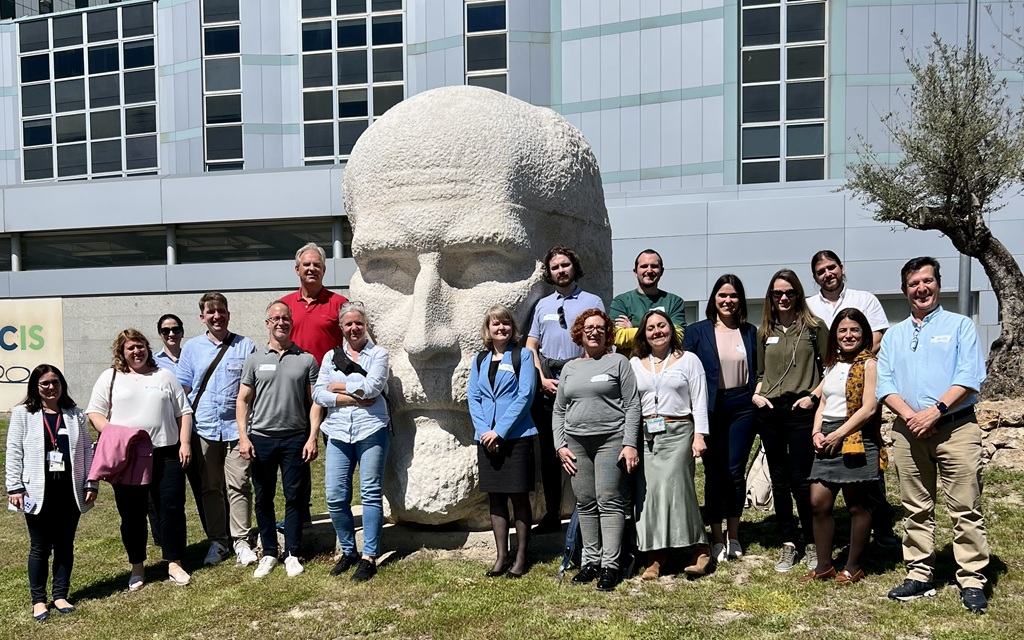
Instituto Ramón y Cajal de Investigación Sanitaria (IRYCIS)
Madrid, Spain
Technical Coordinator
Instituto Ramón y Cajal de Investigación Sanitaria (IRYCIS)
Madrid, Spain
Cancer Research Institute, Biomedical Center of the Slovak Academy of Sciences
Bratislava, Slovakia
Fraunhofer Institute for Biomedical Engineering IBMT
Sulzbach, Germany
Fraunhofer Institute for Biomedical Engineering IBMT
Sulzbach, Germany
Latvian Biomedical Research and Study Centre
Riga, Latvia
Maimonides Biomedical Research Institute of Córdoba
Cordoba, Spain
Candiolo Cancer Institute FPO IRCCS
Turin, Italy
University of Athens
Athens, Greece
Instituto Ramón y Cajal de Investigación Sanitaria (IRYCIS)
Madrid, Spain